
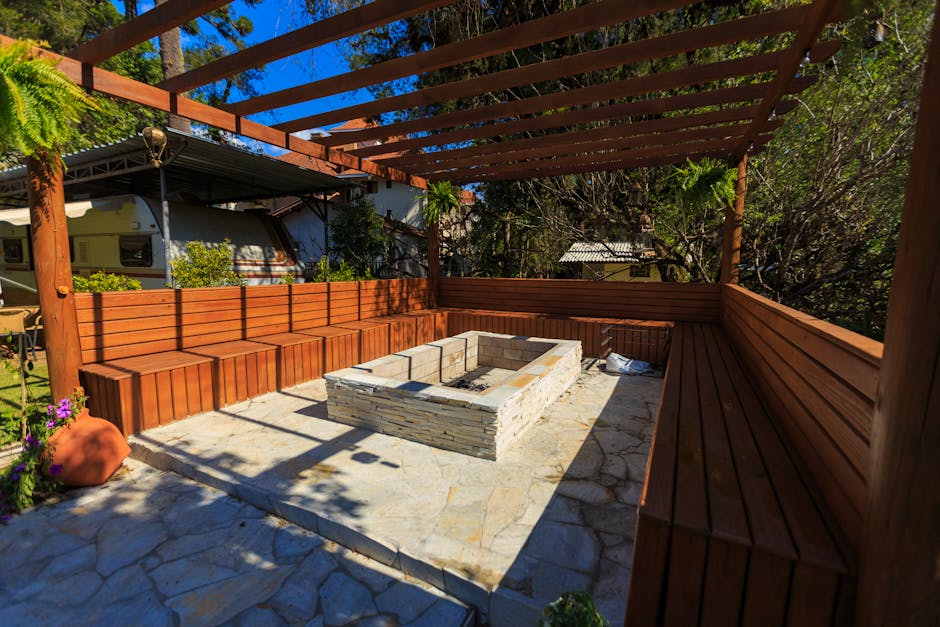
A homeowner lights a string of cheap bulbs, builds a small ring of loose pavers for a wood fire, and sets out a grill under an open pergola—then the first windy October night sends sparks across dry mulch, the bulbs fail in a wet drizzle, and the uneven pavers settle into a tripping hazard. You can get an evening that feels easy and warm, but done wrong the upgrades leave you with maintenance headaches, safety risks, and a patio you avoid.
1. Layered lighting as an afterthought
What people do: Hang a few string lights and aim a bright flood from the eave. It looks atmospheric in pictures and costs less than a full electrical run.
Why it seems reasonable: String lights are cheap, quick to install, and instantly change the mood.
What actually happens: Strings sag, bulbs fail sooner in Houston humidity, and a single floodlight creates glare and deep shadows that make steps and edges hard to see. Poorly placed lighting also attracts mosquitoes to the seating area by illuminating standing water pockets.
What to do instead: Plan lighting in layers—path lights at 12–18 inches for walkways, step lights on risers, downlights from beams at 3000K or lower for comfortable color, and low-voltage accent lights for specimen plants. Electrical runs in Houston usually add $800–$2,500 depending on distance and trenching; expect higher costs if you need a new circuit. For design ideas, see our landscape lighting design & install in Conroe page for examples of layered installs.
2. Wood fire pits built on loose pavers
What people do: Place a metal bowl on pavers and call it a fire pit. It’s portable and looks rustic.
Why it seems reasonable: No permanent build, less cost up front, and you can move it when you want.
What actually happens: Heat and settling damage the pavers and base. Sparks and embers can reach nearby mulch or artificial turf, and wind can push embers farther than you expect on dry October nights. Local code in many Houston suburbs also restricts open fires close to structures and under overhangs.
What to do instead: Choose a gas fire pit or a professionally built wood-burning pit set on a proper compacted base with 4–6 inches of compacted crushed stone and edge restraint. Gas pits require a licensed line run and venting clearances; installation typically runs $2,000–$7,000 depending on gas work and stone finish. If you have artificial turf, check the installation details—turf has melt and scorch limits—see our artificial turf installation guidance for compatibility concerns.
3. Outdoor kitchens without wind-safe cooking setups
What people do: Install a freestanding grill or put a cooktop under a partial pergola without wind barriers.
Why it seems reasonable: Open kitchens feel connected to the yard and keep smoke moving away.
What actually happens: In coastal Houston winds, flames flicker under gusts, causing uneven cooking, flare-ups, and grease getting blown into seating areas. Open grills under porous covers or low pergolas also force smoke toward the house on certain wind directions.
What to do instead: Design the kitchen with wind in mind. Use wind-rated, built-in grills with baffle systems and backdraft vents. Position the cooking wall perpendicular to prevailing winds or include a short masonry windscreen that still allows airflow. Built-in kitchens often run $8,000–$30,000 for mid-to-high-end setups; restricted access or heavy gas work raises the price. See our outdoor kitchen builders in League City for designs that factor wind and line runs.
4. Skipping drainage work because it’s not visible
What people do: Grade the patio level, fill low spots with topsoil, and skip French drains or downspout extensions to save a few hundred dollars.
Why it seems reasonable: The surface looks fine after a rain, and drainage feels like an invisible expense.
What actually happens: Houston clay holds water. Without properly sloped grading and an outlet, water soaks under pavers and into patios, causing base washout and paver settlement over months. Standing water also shortens the life of lighting and corrodes metal components.
What to do instead: Prioritize grading to move water at least 1/8 inch per foot away from structures and add targeted drainage: channel drains at thresholds, downspout extensions to an approved outlet, and French drains where sheet flow collects. Drainage retrofits typically run $25–$75 per linear foot for trench drains and $1,200–$5,000 for larger regrading or retention measures. For complex yards, consult residential drainage specialists—see our residential drainage solutions in Baytown.
5. Rushing the base for pavers and patios
What people do: Lay pavers on a shallow bedding sand or thin gravel to save time and materials.
Why it seems reasonable: Saves on material costs and the job seems done faster.
What actually happens: In Houston the clay swells and shrinks. A thin base lets the ground move, and the edges migrate. Pavers settle, joints open, and you end up relaying parts of the patio in a few years.
What to do instead: Excavate deeper than you think—often 8–12 inches below final surface for pedestrian patios—install 4–8 inches of crushed base compacted in 2-inch lifts, and use a solid edge restraint. That base work is the bulk of the labor and typically costs $6–$18 per square foot extra compared with a shallow do-over. That's the whole trick.
6. Relying on one source of heat or light
What people do: Plan for a single element—a heater or a bright lamp—and expect it to carry every evening.
Why it seems reasonable: Fewer moving parts, lower upfront cost, and a clean look.
What actually happens: Heaters need clearance and fuel access; they can also create zones too hot near the source and cold beyond. A single lamp gives glare or shadow, and if it trips you lose all function. In October, temperatures in Greater Houston can swing from the 70s at dusk to the 50s overnight—plan for layers.
What to do instead: Combine heat sources and lighting. A gas fire pit or built-in fireplace paired with electric low-voltage lighting and a few portable propane heaters gives flexible comfort. Expect small heaters and electrical circuits to add $300–$1,200 depending on type and wiring needs. For lighting and heat that fit patio layouts, check our custom patio renovation services in Friendswood.
7. Using plants that fail in Houston fall weather
What people do: Choose tropical or temperate ornamentals that look great in a nursery but don't handle heavy clay, late-season storms, or salt spray near the coast.
Why it seems reasonable: Big-leaf ornamentals give instant impact and soften hard edges.
What actually happens: Plants that dislike wet feet or compacted soil decline in months. Root rot, leaf scorch, and transplant shock show up the following season, leaving gaps in your landscape just when you want color for gatherings.
What to do instead: Pick region-tested species. Use live oaks or Esperanza shrubs where you need shade and structure, 'St. Augustine' or 'Zoysia' turf for home lawns depending on sun exposure, and native yaupon or Mexican petunia in beds that see occasional standing water. Amend soil in planting holes with drainage material and make sure beds sit slightly higher than lawn grade—2–3 inches—to keep root crowns drier. Landscaping planting and material costs vary: expect $12–$50 per plant for specimen trees and $4–$12 per shrub, depending on size and species.
The most expensive mistake to avoid is skimping on what you can't see: the base and drainage. Pay for proper excavation, crushed base, compaction, and a drainage plan up front and you'll save on relays, rot, and repairs later—especially here in Houston where clay and seasonal storms test every patio.