
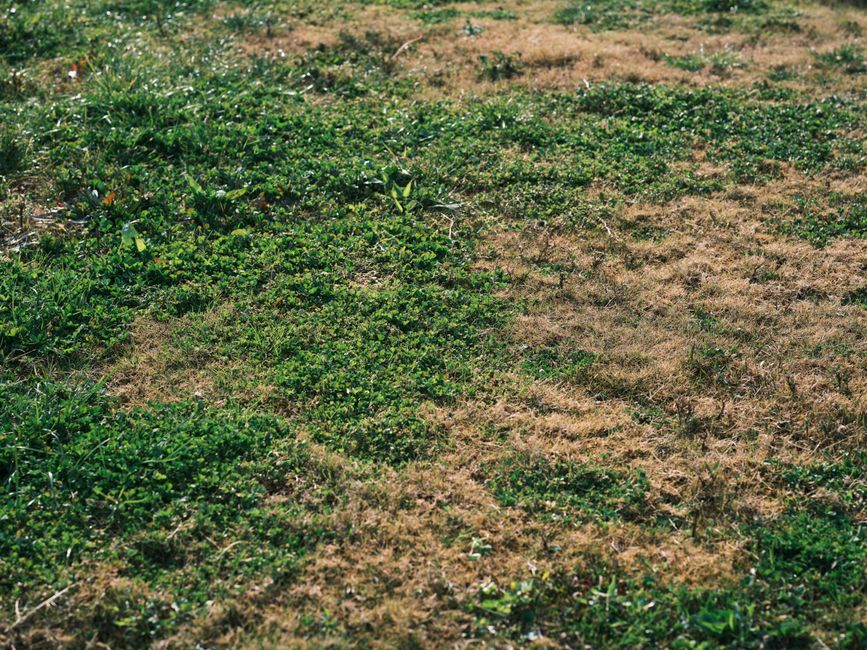
By the second week of August, most Houston homeowners have the same worry: patches of the yard have gone from deep green to straw-colored, and it isn't clear whether the grass is resting, thirsty, or dying. The answer matters, because the wrong response — especially overwatering — can cause more damage than the heat itself. Here is how to read what your lawn is telling you and what to do about it.
The Houston Summer Problem, in Plain Terms
Greater Houston runs on a combination of St. Augustine, Zoysia, and Bermuda lawns, all warm-season grasses that actually prefer heat. What they don't prefer is the specific stress cocktail August delivers: air temperatures in the mid-to-upper 90s, soil temperatures that can push past 100 degrees, high humidity that encourages fungal disease, and stretches of two to three weeks with no meaningful rainfall.
The result is a lawn that browns from several possible causes at once. Sorting them out is the first step of any real Houston lawn care August strategy.
Heat Dormancy vs. Drought Damage
Heat dormancy is a protective response. When soil moisture drops and temperatures climb, warm-season grasses slow growth, pull resources into the roots and crown, and let the blades fade. The lawn looks tan or gray-green, but the crown at the base of each plant is still alive. Give it a good soak or wait for a cool front, and the color returns within a week or two.
Drought damage is different. Once the crown itself dries out, the plant is done and won't recover with watering. The simplest field test: pull gently on a handful of brown blades. Dormant grass resists and stays rooted; dead grass lifts out easily, often with dry, brittle stolons attached.
The Other Culprits Houston Homeowners Miss
Not every brown patch is thirst. In August, three other problems show up constantly across the Greater Houston area. Chinch bugs attack St. Augustine in sunny, dry spots along sidewalks and driveways, leaving irregular yellow-to-brown patches that spread outward. Take-all root rot and gray leaf spot, both fungal, thrive in our humidity and often follow overwatering or evening irrigation. And compacted, clay-heavy soil — common across Harris and Fort Bend counties — can turn a lawn brown simply because water runs off before it soaks in.
If watering doesn't green things up within ten days, the problem probably isn't water. Look closer at the soil line, check for insects at the edge of a browning patch, and note whether the discoloration is spreading in a pattern.
How to Water a Houston Lawn in August
Most brown lawns in August are either underwatered or, surprisingly often, watered incorrectly. Warm-season grasses need roughly one inch of water per week during summer, delivered in one or two deep sessions rather than daily sprinkles. Deep, infrequent watering pushes roots down where soil stays cooler and moisture lingers; shallow daily watering trains roots to stay at the surface, where they cook.
Run your irrigation between 4 a.m. and 8 a.m. so blades dry before the heat of the day. Watering in the evening leaves the canopy wet overnight and is one of the fastest ways to invite fungal disease during a Houston summer.
What to Do Right Now if Your Lawn Is Browning
Start with a simple diagnosis. Push a screwdriver into a brown area; if it slides in six inches easily, the soil has moisture and the problem is not drought. Tug the grass to check the crown. Walk the yard at dawn and look for insects, mushrooms, or the yellow halos that signal fungal disease.
If the lawn is dormant but alive, water deeply once, then hold off and wait for recovery. If you find insects or disease, treat the specific problem rather than dumping more water on it. If the soil is bone-dry and the crowns are still green, resume a proper deep-watering schedule and consider a light application of compost or a wetting agent to help clay soil absorb moisture again.
What to Avoid Until Temperatures Drop
August is the worst month to fertilize a stressed Houston lawn. Nitrogen forces new growth the roots can't support in extreme heat, and a struggling lawn will burn. Hold off on heavy pruning of shade trees over turf, since the sudden increase in direct sun can scorch grass that was acclimated to filtered light. Mow high — three to four inches for St. Augustine — and keep the blade sharp, because ragged cuts lose more moisture and invite disease.
Save fertilization, weed-and-feed products, and aggressive renovation for late September or October, when soil temperatures drop and the grass can actually use the boost.
A Practical Next Step
Spend fifteen minutes this weekend doing a quick lawn audit: check soil moisture with a screwdriver in three spots, tug-test any brown areas, note the time your sprinklers run, and look for insects at the edge of the worst patch. Those four observations will tell you whether you're dealing with dormancy, drought, pests, or disease — and each has a different fix.
If the browning is spreading, the diagnosis isn't clear, or you'd rather have a professional set an irrigation schedule and treatment plan tailored to your yard, it's worth having a licensed landscape professional walk the property before the damage becomes permanent. Getting August right is what makes a green October possible.